By Abinaya Philip and Sigrun Rajendram (20.09.2022)
According to historical sources, a man named Malayappan was the first Tamil to visit Norway. It was in 1716. He was the friend and Tamil teacher of the German missionary Bartholomäus Ziegenbalg, and together they were traveling from the Danish-Norwegian colony of Trankebar in Tamil Nadu in India. Ziegenbalg was “strongly attached to the Tamils and their culture and literature and wanted to tell his client, King Frederick IV (1671–1730), about the skilled and modern Tamils. He thought it would make a great impression on the king if Malayappan joined the trip.”1
240 years later, in the late summer of 1956, another Tamil came to Norway, not on a short visit like Malayappan, but to study. Without knowing it, he thus put Norway on the map for hundreds of Tamils who would follow, first as job and education seekers and later as refugees from the war in Sri Lanka. The man was Antony Wiceslaus Aemelius Rajendram from the country that was then called Ceylon.
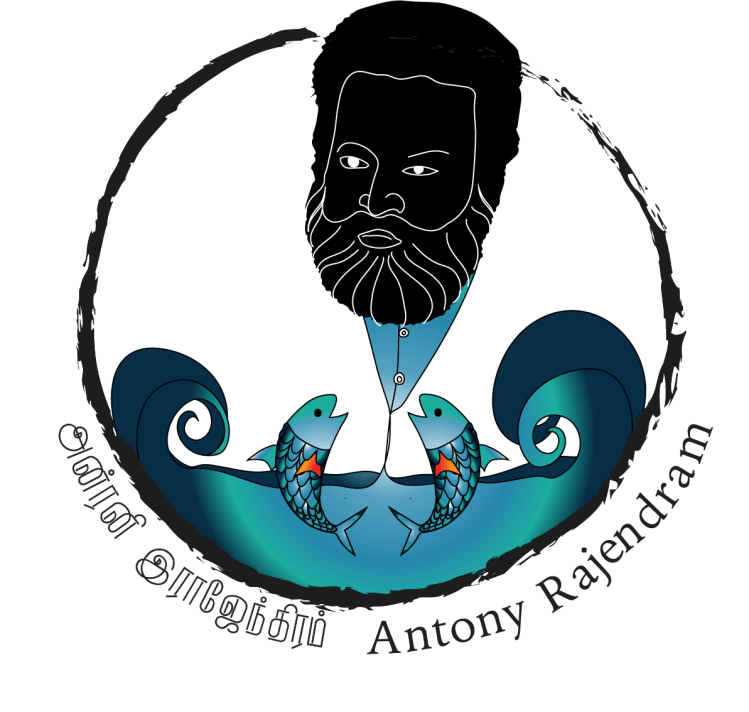
Antony was born in Jaffna on June 20, 1932 and early on showed both leadership qualities and social conscience. There are still those who remember the 16-year-old from the Poonitha Vallavam Sports Club that he helped to start and shape. Contrary to what was common at the time, this club was open to everyone, regardless of class, caste and economy. The only requirement for membership was to participate in volunteer work in the neighborhood. The idea was that young people who were together on the football and cricket field, and who took on tasks for the good of the community, would show the local community that mutual understanding and respect benefited both the individual and the entire local environment.
Several of the comrades from this time came from Jaffna’s fishing community. Antony saw firsthand how poverty and social conventions limited their lives. He refused to accept that this was how it should be and decided already in his teens that a great task awaited him. Gradually, the plan took shape; he would acquire knowledge that could help break the vicious circle of poverty and exploitation experienced by the fishermen. But then he had to go abroad, and abroad, that was England.
His friend Edwin Chelliah also dreamed of studying abroad, and together the two adventurous young men planned to go all the way to Europe – on Edwin’s motorcycle! On June 6, 1955, everything was ready, and the long journey could begin. But the bike was old. It broke down along the way, and by the time they reached Lebanon, their travel funds were exhausted. They had to telegraph home for money to continue their journey, and it was not until late autumn that they arrived in London.
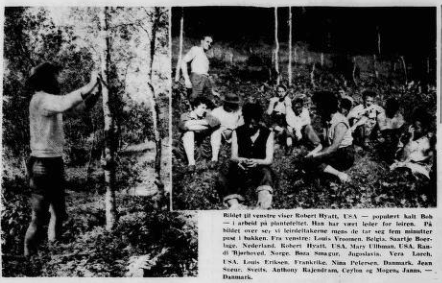
Antony Rajendram in International voluntary work (Tromsø/iTromsø, 03.08.1956)
The Norwegians Antony met there convinced him that Norway was the pioneer country in terms of modern fishing, so he went there after less than a year in England. There were three longer study stays in total before he finally, in July 1967, returned home to start the Cey-Nor Development Project on the island of Karainagar outside Jaffna. From 1969 until he settled with his family in Norway in 1972, he ran a boat building and carpentry workshop on the mainland. The goal of both projects was to build skills and provide secure jobs for fishermen and others from the marginalized part of the population.
From November 1972, Antony lived in Bergen, where he quickly became part of a small but active cosmopolitan environment. Together with friends, he started the International Cultural Association, a get-to-know-you club with members from all four continents. With the refugees who arrived in the 1970s from, among others, Chile, Vietnam and Uganda, the immigrant population increased rapidly. Bergen was facing new and unfamiliar challenges related to integration, not least of young and rootless people. Antony’s answer to this was the International Book Café, a meeting place for immigrant youth who lacked a place to be. There they met across national origins, and there they got to know Norwegian youth who found this offer new and exciting.
In the 80s, the first Tamil refugees arrived. As an environmental teacher at St. Paul’s School, Antony saw how many of their children struggled to reconcile being Tamil with growing up in Norway. In 1987, he took the initiative to establish the Tamil Primary School in Bergen, a language and cultural tour offer where children and young people from different parts of the city came together every Saturday, and where they gained strength in experienced community and education about their parents’ backgrounds.
There are many other “traces” of Antony Rajendram’s life and work, from the time he began his education in Norway in 1956 until he died in Bergen on September 12, 1990. His studies took him from Vardø in the north to Kristiansand in the south, and everywhere this Ceylonese was noticed and the local newspapers wrote about him and his plans. First out were the northern Norwegian newspapers. In the summer of 1956 they wrote about the man from exotic Ceylon who participated in a camp on Senja under the auspices of Internasjonal Dugnad2. The following year he was interviewed about what it was like to be a guest on the research vessels “Thor Iversen” and “Peder Rønnestad”, on a cruise in the Arctic Ocean. In 1958, Fredrikstad magazine had an article from the laboratory at the Stabburet Food Factory where he had an internship. And so it continued.
Over the years, Antony became a voice that many in this country listened to, whether it concerned integration issues in general or the situation of the Tamils in particular. The lectures he gave may still be remembered by some who listened. The articles and interviews must be found in various archives. Here, in Catablog Antony Rajendram, we will convey the memories that friends and acquaintances have of the man Antony Rajendram, in the form of texts and pictures they have sent us. Because as we see it, archives are not just about facts, but about interpersonal relationships and connections.
********
DTA started collecting memories and photos in November 2021.
Work on the catablog started on February 21, 2022.
We welcome new contributions to further develop the catablog.

Read memory narratives in the source archive at Lokalhistoriewiki.no at the Norway National Library.
Read lexical articles in Tamil focus area at Lokalhistoriewiki.no at the Norway National Library.
[1] Lokalhistoriewiki.no. (17.10.2021). Malayappan. Lokalhistoriewiki.no. https://lokalhistoriewiki.no/wiki/Malayappan
[2] Tromsø 1956.08.03. (1956, 1956-08-03). Tromsø/iTromsø. https://urn.nb.no/URN:NBN:no-nb_digavis_tromso_null_null_19560803_59_177_1

Launched for the 90th birth anniversary of Antony Rajendram
(20.06.1932 – 12.09.1990)
புதுப்பிப்பு│Update: 24.02.2026
 புலம்பெயர் தமிழ் சுவடிகள் காப்பகங்கள்